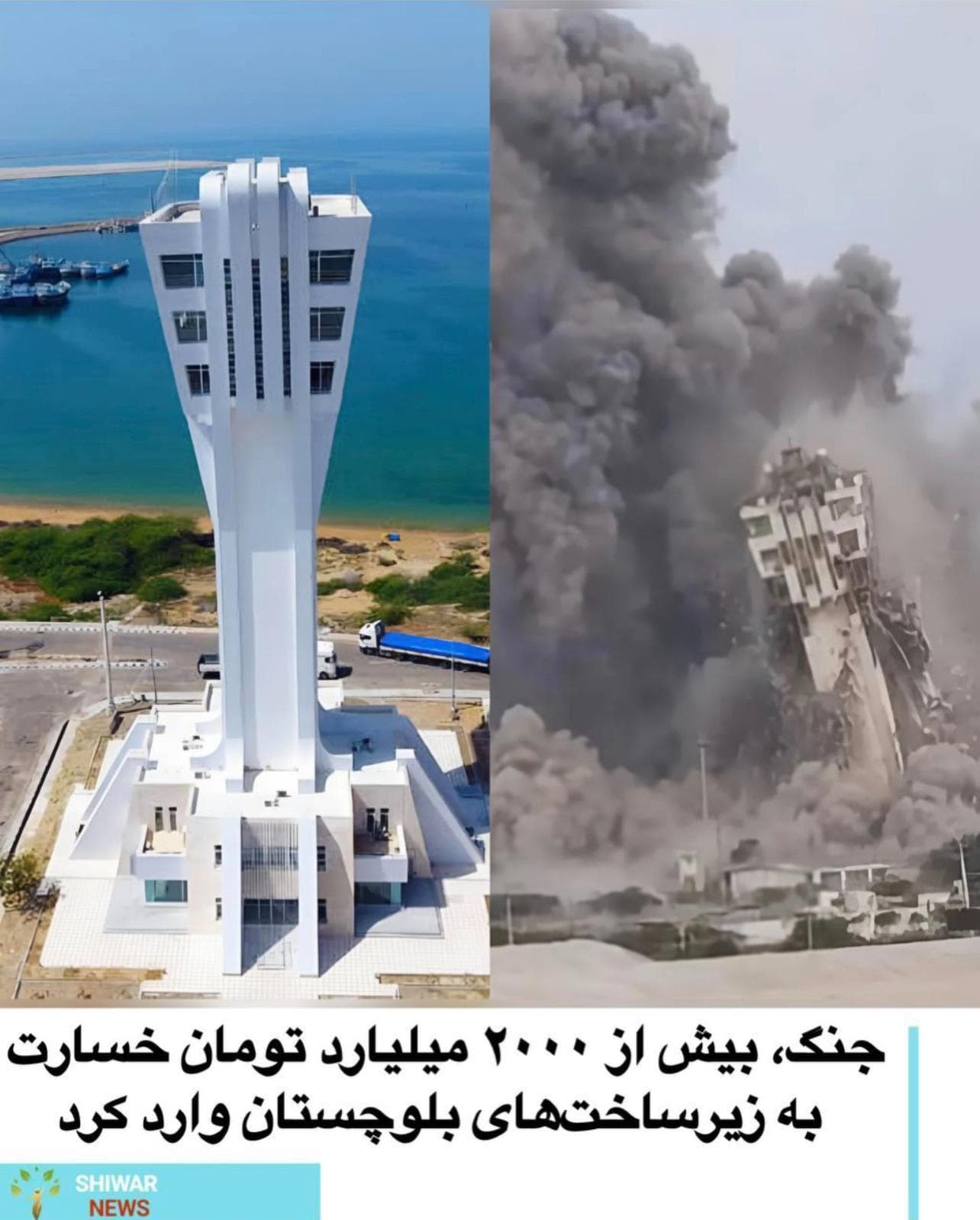
According to the Crisis Management Department, the majority of the damage has been inflicted on civilian infrastructure, while the extent of damage to military facilities is still under assessment. The airports in Konarak and Iranshahr are among the facilities reported to have sustained significant damage to their infrastructure.
In recent days, the cities of Chabahar, Konarak, Rask, Iranshahr, and Saravan have experienced repeated airstrikes, multiple explosions, and heightened security tensions. Beyond the destruction of critical infrastructure, these attacks have had far-reaching consequences for local communities.
The Costs That Financial Estimates Do Not Capture
Beyond the estimated 2 trillion tomans in physical damage, the conflict has imposed much deeper and longer-lasting burdens on the province:
* Disruption to air and ground transportation: Damage to airports and ongoing security concerns have complicated passenger travel, the transfer of patients, and commercial activities.
* Impact on the local economy: Many small businesses, marketplaces, fishermen, drivers, and workers in the transportation sector have experienced significant income losses or been forced to suspend operations.
* Decline in investment and development: The insecurity created by the attacks has discouraged investment in infrastructure, industrial, and port development projects, slowing the province’s economic growth.
* Damage to public services: In some areas, communication networks, electricity, and essential public services have been disrupted, making access to basic services more difficult for residents.
* Psychological and social consequences: The continued sound of explosions, fear of further attacks, and uncertainty about the future have placed considerable psychological strain on communities, particularly on children, the elderly, and families.
* Impact on Chabahar’s strategic role: Chabahar Port, one of Iran’s most important commercial and transit hubs, may face declining confidence from investors and trading partners due to security concerns and disruptions to logistics.
A Province Already Facing Longstanding Deprivation
Even before the recent conflict, Balochistan struggled with inadequate healthcare and educational infrastructure, poor transportation networks, high unemployment, and widespread socioeconomic deprivation. The destruction caused by the war has made the task of rebuilding and addressing these long-standing challenges even more difficult, placing an additional burden on the province’s residents.
Experts believe that while damaged infrastructure can eventually be rebuilt through financial investment and time, restoring public confidence, a sense of security, and sustainable economic growth will require a far longer and more costly process.
War does not only destroy buildings and infrastructure. It also damages livelihoods, mental health, social stability, and the future prospects of millions of people—losses that cannot be fully measured in any financial assessment.