Women activists may speak about state repression, discrimination and violence without facing the same level of social backlash. However, when those same activists speak about domestic violence, discrimination against women and inequalities within their own communities, they sometimes face waves of opposition, attacks and accusations.
This raises important questions about the position of women, the right to criticise problems within one's own community and society's response to internal criticism.
Why is speaking about violence and discrimination within a community sometimes seen as an attack on the community or its culture?
Why might criticism of state violence be accepted, while criticism of domestic violence and social inequalities faces resistance?
And why are women expected to raise their voices against certain forms of violence while remaining silent about others?
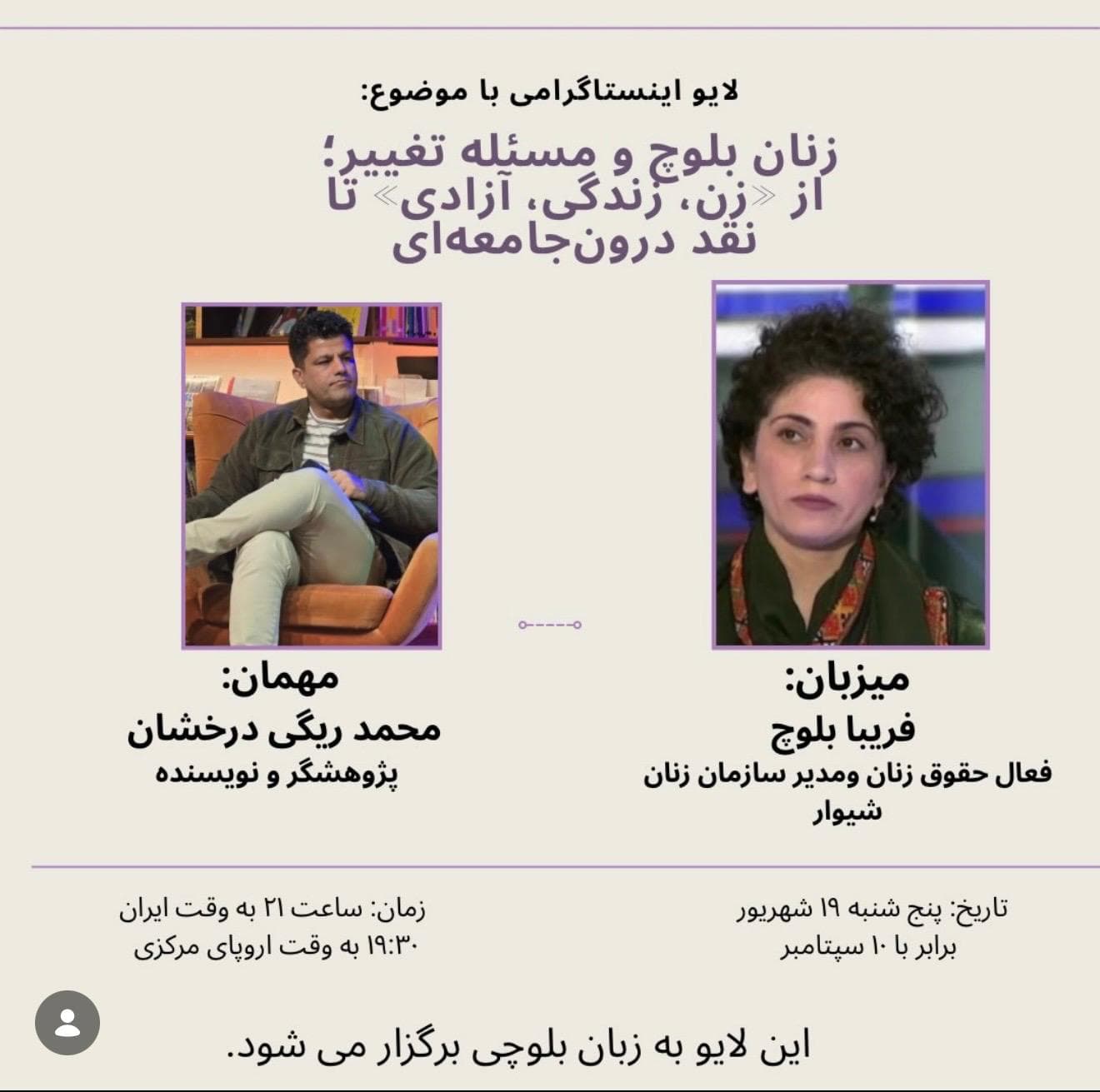
In the second part of the live discussion “Baloch Women and the Question of Change,” Fariba Baloch speaks with Mohammad Rigi Derakhshan, a Baloch writer and researcher, about Baloch women, violence against women and resistance to criticism within the community.
This part of the discussion focuses on the social sensitivities surrounding violence against women within the community and the importance of addressing questions of discrimination and inequality.