When discussing women's rights and social change, family, tradition and religion are often presented as some of the barriers women face. But can these same structures also become part of the process of change and support for women's rights?
The family can be the first place where respect, equality and recognition of women's rights are taught. Traditions and social beliefs can also be reconsidered and reinterpreted to challenge attitudes and practices that contribute to discrimination and inequality.
Religious values and traditions may also provide opportunities to challenge violence against women and support their human dignity and rights.
Social change does not necessarily mean abandoning a community's identity, culture or beliefs. Sometimes change begins within the community itself, through dialogue, criticism and reconsideration of behaviours and beliefs that contribute to inequality or violence against women.
The central question is how the potential of family, religion and tradition can be used to support women and help create a more equal society.
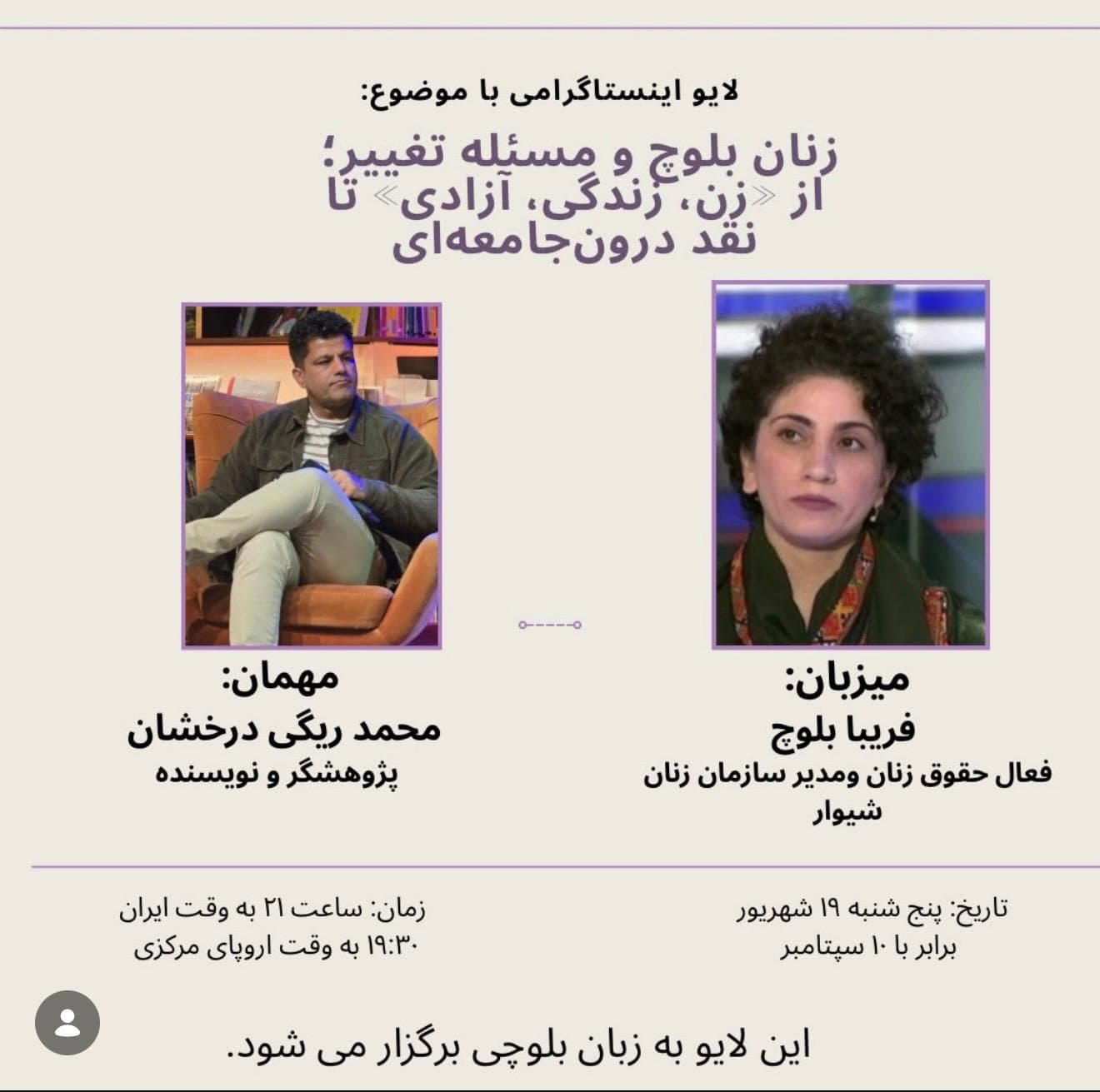
In this part of the live discussion “Baloch Women and the Question of Change,” Fariba Baloch speaks with Mohammad Rigi Derakhshan, a Baloch writer and researcher, about this question and the role of social and cultural structures in supporting women's rights.
The discussion explores the possibility of creating change from within the community and using existing social and cultural resources to challenge discrimination and violence against women.